Best Investment in Gwadar – Canadian City Gwadar
Gwadar has increasingly become a subject of discussion among Pakistan’s property investors because the city combines a strategic coastal location with major infrastructure, port, transportation and economic-development projects. For anyone searching for the best investment in Gwadar, however, the right approach is not simply to look for a project making the biggest marketing claims. A property investment should be examined through practical factors such as legal status, location, development, accessibility, available plot categories, payment structure and the long-term direction of the surrounding city. Canadian City Gwadar is one project that investors can evaluate within this broader context. According to the project’s official website, Canadian City Gwadar covers 346 acres, offers residential and commercial plots, and states that its NOC has been approved by the Gwadar Development Authority (GDA).
The wider Gwadar story also provides important context. Official Gwadar Port Authority information describes the port as a deep-sea port whose development includes infrastructure, terminals and cargo-handling facilities, while the CPEC Secretariat lists the development of the port and Free Zone, Gwadar Smart Port City Master Plan, Eastbay Expressway and New Gwadar International Airport among major Gwadar projects. This means property investors are looking at more than a conventional housing market; they are considering a city undergoing long-term economic and infrastructure development. At the same time, future potential should never be treated as a guaranteed return. Property values can rise, remain flat or decline depending on market demand, development speed, infrastructure delivery, economic conditions and investor sentiment.

Why Gwadar Is Attracting Property Investors
The investment case for Gwadar starts with its geographical and economic position. Unlike a conventional residential city whose property market is primarily driven by local population growth, Gwadar’s development is connected with maritime trade, logistics, regional connectivity, infrastructure and the broader CPEC framework. The official CPEC project portal currently identifies several completed Gwadar projects, including the Port and Free Zone, Smart Port City Master Plan, Eastbay Expressway, Pak-China Friendship Hospital, desalination infrastructure and New Gwadar International Airport. It also lists additional water infrastructure and other projects as under construction or in the pipeline.
For a property investor, this broader development environment matters because infrastructure can influence how a city expands. Roads can improve accessibility, airports can strengthen connections, commercial activity can create demand for business premises, and employment opportunities can contribute to housing demand. But investors should distinguish between infrastructure potential and guaranteed property appreciation. A new road or economic project does not automatically mean every surrounding plot will increase in value at the same rate. Location, legal status, development quality, accessibility and actual market demand remain important.
This is why Gwadar should be considered as a long-term property market rather than a quick-profit opportunity. Investors who understand this distinction can make more informed decisions and avoid relying solely on promotional statements.
Gwadar Port and Regional Connectivity
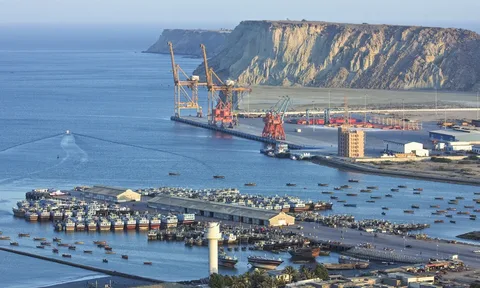
Gwadar Port is central to the city’s economic identity. The Gwadar Port Authority states that its mandate includes planning, construction, operation, management and maintenance of Gwadar Deep Water Port. Its current website also reports recent port activity, including vessel arrivals and developments related to commercial operations. The port’s presence gives Gwadar an economic foundation that extends beyond residential real estate.
From an investment perspective, port-led development can create demand across several sectors. Logistics companies may require commercial facilities, businesses may seek offices or warehouses, workers may need accommodation, and supporting services can emerge around expanding commercial activity. That does not mean every property automatically benefits, but it helps explain why investors continue to monitor Gwadar’s property market.
The long-term significance of the port is also connected with transportation infrastructure. Gwadar’s development is being supported by road, airport, water and urban-development projects, creating a larger ecosystem around the port. Investors considering Canadian City Gwadar should therefore look at the project not as an isolated housing development but as one property option within a much larger city-development story.
Infrastructure and Development Momentum
Infrastructure is one of the most important factors when evaluating property in an emerging city. In Gwadar, several projects are relevant to future connectivity. The CPEC Secretariat lists the Eastbay Expressway among completed CPEC projects and identifies additional projects related to water supply and desalination. In August 2026, Gwadar Pro reported that the government had acquired 750 acres for Phase II of the Gwadar Eastbay Expressway, planned between New Gwadar International Airport and Gwadar Port. The report said the project had an estimated cost of Rs30.13 billion and was largely financed through Chinese grant-in-aid under CPEC.
These developments are relevant because accessibility is a fundamental component of real estate value. A property that is legally secure but difficult to access may not perform in the same way as a property connected to established roads and surrounding development. As Gwadar’s infrastructure network evolves, investors should monitor not only announcements but also actual construction progress and operational connectivity.
For Canadian City Gwadar, the project’s own published information says development includes roads and sewerage work and reports approximately 60 kilometres of roads constructed. Because these are project-provided figures, investors should independently verify current development status before making a purchase decision.
Why Location Matters in Gwadar Property Investment
Location remains one of the oldest and most reliable principles in real estate. Even within the same city, two projects can have very different investment profiles because of differences in road access, surrounding development, commercial activity, utilities and distance from important destinations. This is particularly relevant in a developing city such as Gwadar, where infrastructure and urban expansion are still shaping the market.
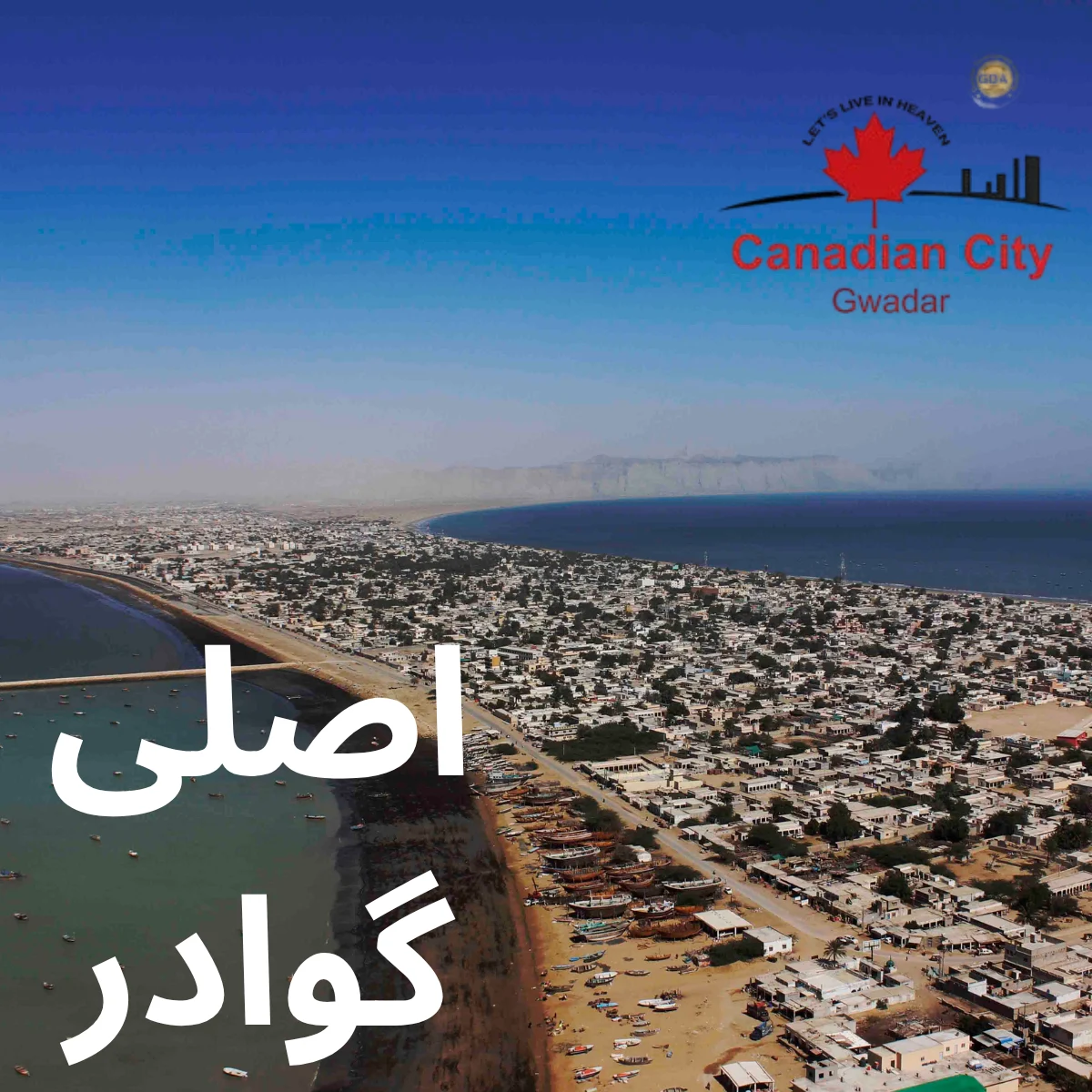
Canadian City Gwadar states that it is located on Main Mand Avenue and near Gwadar’s deep-sea port area. Its official website describes the project as being located in the heart of Gwadar and offering both residential and commercial plots. For an investor, these claims should be considered alongside an independent review of the official site plan, surrounding roads, access routes and actual development on the ground.
A sensible investor should visit the location whenever possible. Maps and marketing material are useful starting points, but physical inspection can reveal details that an online listing cannot. Look at road conditions, neighbouring developments, utility infrastructure, construction activity and accessibility at different times of day. If travelling to Gwadar is not practical, investors should request official documentation, recent site videos, maps and development updates before transferring funds.

Canadian City Gwadar at a Glance
Canadian City Gwadar is presented by its official website as a 346-acre housing project offering residential and commercial plots. The project states that its NOC has been approved by the Gwadar Development Authority and that it is listed in the “A” category of Gwadar Master Plan Phase 1. These are important points for investors because legal and planning status should be among the first things checked before considering price or expected appreciation.
The project’s official website also highlights land ownership, GDA approval, an installment facility and a 30% down-payment structure as reasons to consider the development. These are project-provided claims and should be matched against the latest official documentation and contractual terms.
Canadian City Gwadar can therefore be evaluated through several investment dimensions: legal status, location, plot type, affordability, development progress and the future development of Gwadar itself. No single factor should determine an investment decision. A project with an attractive price but weak documentation may present a different risk profile from one with verified approval and established infrastructure.
GDA Approval and Project Status
Legal verification is one of the most important steps in property investment. The Gwadar Development Authority maintains an official NOC verification facility where investors can check project information and status. Canadian City Gwadar’s own FAQ identifies its NOC number as 26/05/HS/GDA and directs investors toward GDA for verification.
This is particularly important because investors should not rely exclusively on a developer’s website, salesperson or social media post. Before purchasing, request the relevant documentation and verify it through the competent authority. The exact status of a project, approved area, plot category and applicable conditions should be confirmed using current official records.
Legal verification also protects investors from confusion between marketing terminology and official planning classifications. Terms such as “A category,” “approved,” “prime location” or “high return” can have very different meanings depending on context. The safest approach is to identify what is formally documented and then separately evaluate the commercial potential.

Residential and Commercial Investment Options
One reason Canadian City Gwadar may attract different types of investors is that the project offers both residential and commercial plots. Residential property is generally connected with housing demand and community development, while commercial property is more closely linked with business activity, footfall and surrounding commercial growth.
For a residential investor, questions might include whether the surrounding area is developing, how quickly utilities and roads are progressing, what future housing demand could look like and whether the investor plans to build or hold the plot. For a commercial investor, the analysis can be different. Visibility, road frontage, access, nearby businesses, plot size, commercial zoning and potential customer traffic may be more important.
The correct choice therefore depends on the investor’s objective. Someone looking for a future home may prioritize community planning and residential surroundings, while an investor focused on business property may examine commercial accessibility and demand. Comparing the two categories without considering the intended use can produce a misleading conclusion.
Residential Plots
Residential plots can be considered by investors who want to purchase land for future construction or long-term holding. The appeal of this strategy is relatively straightforward: an investor buys land today and may later construct a house or sell the plot if market conditions become favourable. The outcome, however, depends on future demand, development completion, local property prices and the investor’s holding period.
Canadian City Gwadar states that it offers residential plots within its development and aims to provide an internationally planned housing environment. For investors considering residential plots, the most useful questions are practical ones: Is the relevant block developed? Are roads accessible? Are utilities available or planned? What is the current demand for residential plots? What are the transfer and development charges? What are the terms of the purchase agreement?
Residential property should not be purchased simply because a city is expected to grow. The investor should identify the specific mechanism through which that growth could affect the chosen plot.
Commercial Plots
Commercial property can offer a different investment profile because its future value may be influenced by business activity and customer movement. In an emerging city, commercial plots can become increasingly relevant as residential communities expand and businesses begin serving those communities. Yet commercial land can also require patience because demand may develop gradually.
Canadian City Gwadar offers commercial plots alongside residential plots, giving investors an opportunity to evaluate property according to different objectives. A commercial investor should pay close attention to the exact commercial location rather than assuming that every commercial plot will perform identically.
Road width, frontage, visibility, nearby population, existing businesses and future commercial planning can all matter. Investors should also calculate the total acquisition cost rather than looking only at the advertised plot price. Development charges, documentation, taxes, transfer fees and construction costs can change the overall investment requirement.
Development Progress and Investment Considerations
Development progress can make a major difference to an investor’s experience. A plot inside a paper-only development and a plot inside a visibly developing community are two very different propositions. Canadian City Gwadar publishes development information on its website and states that roads and sewerage work have been progressing, while its development page presents project updates and related material.
Investors should still verify the latest situation directly. A useful inspection involves checking whether roads are physically constructed, whether drainage and sewerage work is visible, whether electricity and water infrastructure are available, and whether neighbouring plots are being developed. Recent photographs and videos can help, but an on-site visit provides stronger evidence.
Development timelines should also be treated carefully. Property projects can experience delays because of financing, approvals, infrastructure challenges, market conditions or other factors. A responsible investment decision therefore considers both the developer’s stated plan and the investor’s ability to wait if development takes longer than expected.
Roads and Infrastructure
Road infrastructure is particularly important because it connects a property with the rest of the city. The CPEC Secretariat lists the Gwadar Eastbay Expressway among completed CPEC projects, while the 2026 reporting on Phase II indicates continued investment in connectivity between the airport and port.
For Canadian City Gwadar, investors should examine how the project’s internal roads connect with the broader road network. A well-planned internal street is useful, but its investment significance increases when it provides practical access to major city routes and commercial areas.
Infrastructure also affects the usability of property. A residential plot may become more attractive when surrounding roads, utilities and community facilities become functional. Commercial property may benefit when customers can reach the area conveniently. These effects are not automatic, but they are important components of property-market analysis.
Gwadar’s Future Economic Potential
Gwadar’s future economic potential is closely linked with port activity, transportation, urban development and regional connectivity. The Gwadar Port Authority describes plans and operations related to the deep-sea port, while its current website reports commercial activity and recent vessel movements. The CPEC Secretariat also lists a number of completed and ongoing projects in the city.
For property investors, the key question is how these macro-level developments translate into local demand. Economic activity can generate jobs and businesses, which can in turn create demand for accommodation, retail, offices and services. But this process takes time and does not necessarily benefit every location equally.
This is why the phrase best investment in Gwadar should be approached as a research question rather than a guaranteed label. Canadian City Gwadar may be one project worth evaluating, but investors should compare its legal documentation, location, development and pricing with other available options before making a final decision.
New Gwadar International Airport
The New Gwadar International Airport is another major part of the city’s connectivity story. The official CPEC project page says the airport was completed and inaugurated on 14 October 2024, and describes its ability to handle a combination of domestic and international aircraft.
Air connectivity matters to a developing business and tourism destination because it can reduce travel friction for residents, investors, businesses and visitors. For real estate, better connectivity can contribute to the attractiveness of surrounding areas, although the actual effect depends on passenger volumes, economic activity and supporting infrastructure.
Investors should therefore view the airport as part of a larger ecosystem rather than as an automatic property-price trigger. The most meaningful question is whether improved connectivity contributes to sustained economic and population activity in the areas being considered.
Gwadar Port and Free Zone
The Gwadar Port and Free Zone form another important part of the city’s development model. The CPEC Secretariat identifies the development of the Port and Free Zone as a completed CPEC project. The Gwadar Port Authority also describes private-sector participation in terminal and cargo-handling development as part of its port-development approach.
A functioning commercial ecosystem can create demand for logistics, services, accommodation and business facilities. Property investors may therefore watch commercial activity around the port and related infrastructure when evaluating long-term opportunities.
However, the relationship between economic development and residential property prices is not immediate. Investors should avoid assuming that a large infrastructure project automatically guarantees appreciation in a particular housing scheme. Instead, they should look for evidence of actual development, business activity, population growth and demand.
How to Evaluate a Property Investment in Gwadar
A practical investment evaluation can be divided into several stages. First, verify the project’s legal status with the relevant authority. Second, inspect the location and confirm that the plot exists within the approved plan. Third, investigate development progress and utilities. Fourth, compare the price with similar properties in the same area. Finally, calculate the complete investment cost and decide whether the expected holding period matches your financial situation.
For Canadian City Gwadar, the official website provides information about the project’s location, size, NOC claim, plot categories and development. That information is useful for initial research, but independent verification remains important.
Investors should also request written details regarding transfer procedures, possession, development charges, installment terms, cancellation policies and resale procedures. Property decisions become much clearer when the investor knows exactly what is being purchased and what obligations come with it.
Why GDA Approval Matters
GDA approval is an important due-diligence factor because it relates to the project’s regulatory status. The GDA operates an NOC verification system, allowing investors to review project records. Canadian City Gwadar states that its NOC is approved by GDA and provides a reference number for verification.
This does not mean approval should be treated as a guarantee of profit. Regulatory approval and investment performance are separate matters. Approval can help address one category of risk, while market demand, pricing, development execution and liquidity remain separate considerations.
For this reason, GDA verification should be viewed as one step in a broader due-diligence process. Investors should retain copies of official documents, agreements and payment receipts and ensure that the seller or developer details match the documentation.
Canadian City Gwadar and CPEC
CPEC is an important part of Gwadar’s development narrative. The official CPEC portal lists numerous Gwadar projects, including the port and Free Zone, Smart Port City Master Plan, Eastbay Expressway, hospital, water infrastructure and airport. Canadian City Gwadar itself describes its project within the wider context of Gwadar’s CPEC-linked development.
For investors, CPEC should be understood as a long-term infrastructure and economic-development framework rather than a promise of immediate property appreciation. Projects can have different timelines, budgets and operational outcomes. Some infrastructure may benefit particular areas more than others.
The most useful investment approach is therefore to connect the macro story with the micro location. Instead of simply asking whether CPEC is developing Gwadar, ask how a particular plot could be affected by roads, businesses, population, services and connectivity around that plot.

Affordability and Payment Planning
Affordability is one reason installment-based property purchases attract investors. Canadian City Gwadar highlights an installment structure with a 30% down payment on its website. Payment plans can make property acquisition more accessible, but investors should calculate the entire payment obligation before committing.
A low initial payment does not necessarily mean a low total investment. Investors should examine the number and size of installments, quarterly payments if applicable, development charges, taxes, transfer fees and any other contractual expenses. They should also maintain sufficient financial reserves rather than putting all available cash into a property.
The ideal payment structure is one that an investor can comfortably maintain without depending on speculative future profits. Property investment works better as a planned financial commitment than as a race against an expected price increase.
Risks Every Property Investor Should Consider
Every property investment carries risk, and Gwadar is no exception. Development schedules can change, market demand can fluctuate, resale liquidity can vary, and economic conditions can influence property prices. Investors should also consider currency conditions, financing costs, construction expenses and changes in regulations.
There is another important risk: buying based solely on marketing language. Phrases such as “guaranteed return,” “double your money,” or “future price increase” should be treated cautiously unless supported by credible evidence. No responsible investor should assume that a property will definitely appreciate by a particular percentage.
Canadian City Gwadar should therefore be evaluated through documentation, physical development, location, market pricing and personal financial capacity. These factors provide a stronger foundation for decision-making than promotional predictions.
Who Can Consider Canadian City Gwadar?
Canadian City Gwadar may be relevant to several categories of investors, including people looking for residential land, investors interested in commercial property, and buyers seeking a longer-term position in Gwadar’s developing property market. The project officially offers both residential and commercial plots and presents itself as a GDA-approved 346-acre development.
A long-term investor may be interested in the combination of project-level development and wider Gwadar infrastructure. A buyer planning to construct a home may focus more heavily on utilities, roads and community development. A commercial buyer may focus on access, visibility and future business activity.
The important point is that there is no single investment strategy suitable for everyone. The same plot can be attractive to one investor and unsuitable for another depending on budget, risk tolerance, investment horizon and intended use. The best decision is therefore the one supported by verified information and aligned with the buyer’s own financial objectives.
Frequently Asked Questions
Is Canadian City Gwadar a good option for property investment?
Canadian City Gwadar can be considered as one option for investors researching property in Gwadar. Its official website states that the project covers 346 acres, offers residential and commercial plots, and has a GDA-approved NOC. Investors should independently verify the latest legal and development status before purchasing.
Is Canadian City Gwadar GDA approved?
Canadian City Gwadar states that its NOC is approved by the Gwadar Development Authority and provides NOC number 26/05/HS/GDA for verification. Buyers should verify the current record directly through GDA’s official NOC verification system.
Does Canadian City Gwadar offer residential and commercial plots?
Yes. According to the project’s official website, Canadian City Gwadar offers both residential and commercial plots. The appropriate option depends on the investor’s intended use, budget and investment horizon.
Why is Gwadar important for property investors?
Gwadar is undergoing development involving its deep-sea port, Free Zone, airport, transportation infrastructure and other projects. The CPEC Secretariat lists several completed, under-construction and pipeline projects in Gwadar. These developments provide context for the city’s long-term economic potential, but they do not guarantee property appreciation.
What should I verify before buying a plot in Gwadar?
Before purchasing, verify the project’s NOC and approved status, plot documentation, ownership, location, development progress, utilities, payment schedule, transfer procedure, additional charges and applicable terms. GDA provides an official NOC verification facility that investors can use as part of their due diligence.