For centuries, Russia’s greatest geopolitical challenge has been a quirk of geography: its massive northern coastline is locked in ice for much of the year.
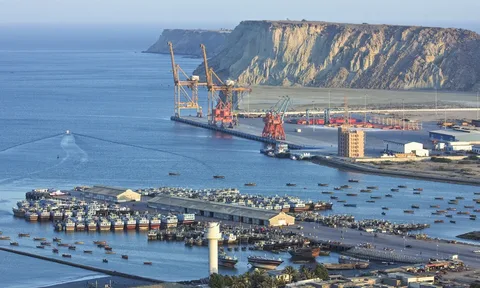
Today, Moscow’s search for reliable, year-round maritime access has led its gaze toward South Asia—specifically, to Pakistan’s deep-sea Gwadar Port. Positioned at the mouth of the Arabian Sea, Gwadar is no longer just a cornerstone of the China-Pakistan Economic Corridor (CPEC); it is becoming a vital piece in Russia’s broader Eurasian strategy.
Here is a breakdown of why Russia is so invested in Gwadar, and what it means for global trade.
1. The Historical Holy Grail: Warm-Water Access
While Russia commands an immense landmass, many of its primary northern and eastern ports freeze solid during the harsh winter months. Shipping through the Baltic or Black Seas introduces heavy reliance on European chokepoints.
Gwadar offers an elegant solution:
Ice-Free 365 Days a Year: Deep-water access directly into the Arabian Sea.
Chokepoint Bypass: Provides a direct maritime launchpad to the Indian Ocean, bypassing restricted European waterways.
2. Linking the Giants: INSTC meets CPEC
Moscow isn’t just looking at Gwadar as an isolated port; it wants to stitch together a massive land-and-rail network spanning Eurasia.
Russia aims to connect Gwadar with the International North-South Transport Corridor (INSTC)—a multi-modal transit network moving freight between India, Iran, Azerbaijan, and Russia. By plugging into Gwadar, Russia effectively bridges the gap between the INSTC and China’s Belt and Road Initiative (BRI), creating an unprecedented trade superhighway across central and southern Asia.
3. Fueling South Asia: Energy Export Expansion
Faced with shifting western markets, Russia has actively pivoted its vast energy sector toward Asia. South Asia’s booming population and developing economies have an insatiable demand for power.
Gwadar serves as a perfect energy hub for Moscow to:
Set up Liquefied Natural Gas (LNG) storage and re-gasification terminals.
Position itself as a key player in regional pipeline projects, securing new, long-term buyers for Russian crude and gas.
4. Redefining the Geopolitical Balance
Beyond economics, Russia’s interest in Gwadar is a chess move toward a multipolar world order—one where global power isn’t dictated solely by Western alliances.
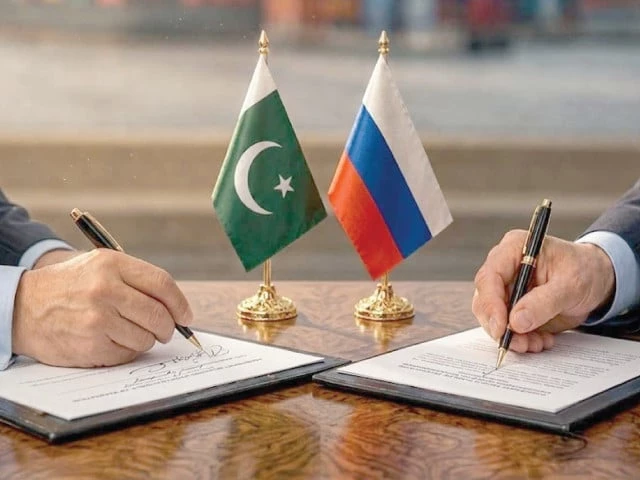
Building tight maritime and economic infrastructure with Pakistan allows Moscow to diversify its alliances in South Asia. It balances its traditional, deep-rooted ties with India while cementing a strategic partnership with China, establishing a powerful Eurasian bloc capable of shifting global trade dynamics.
The Bottom Line: Gwadar is shifting from a regional transit point into a global geopolitical anchor. For Russia, it represents the unlocking of a historic maritime bottleneck and a gateway to the economic future of Asia.