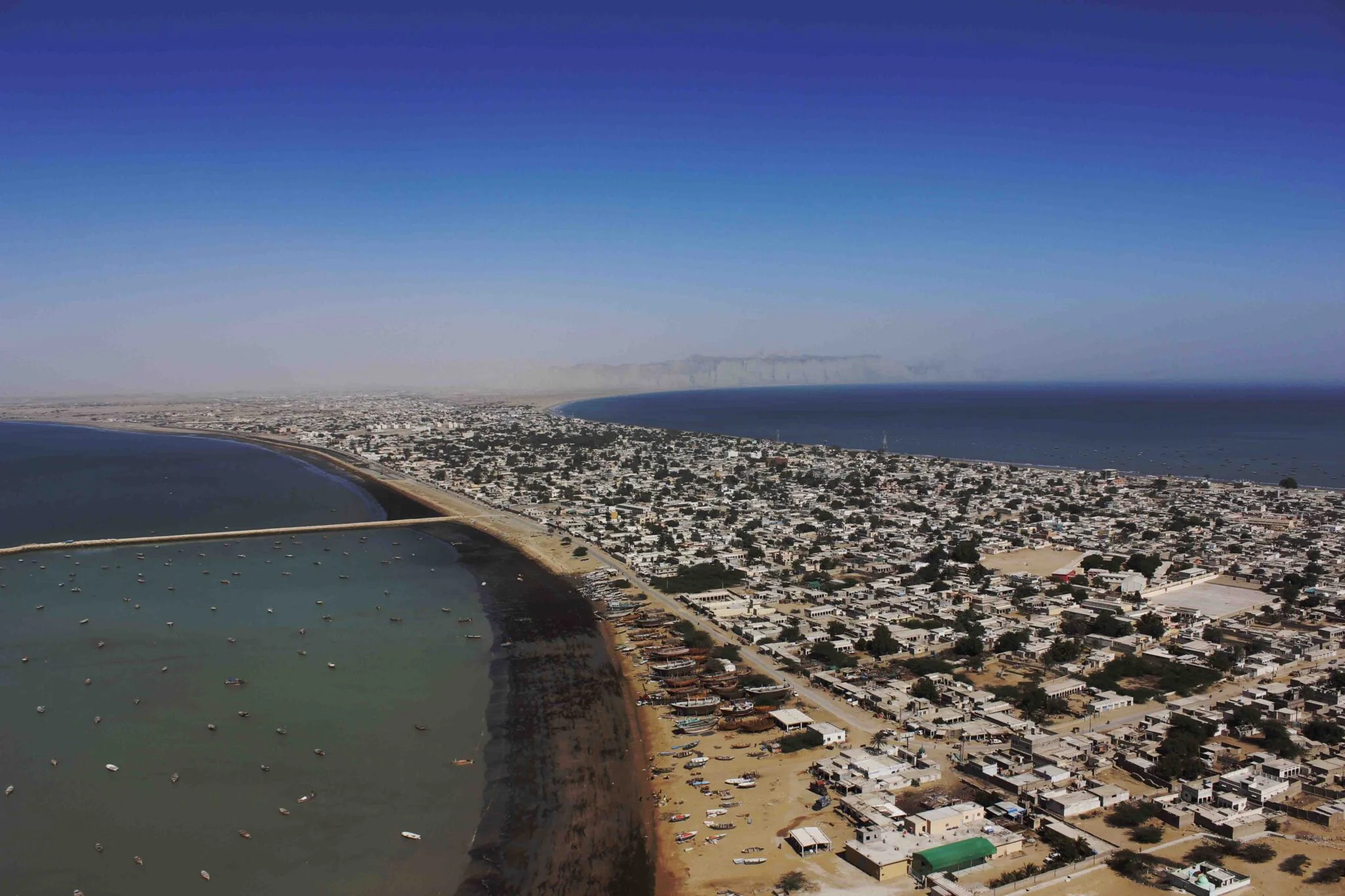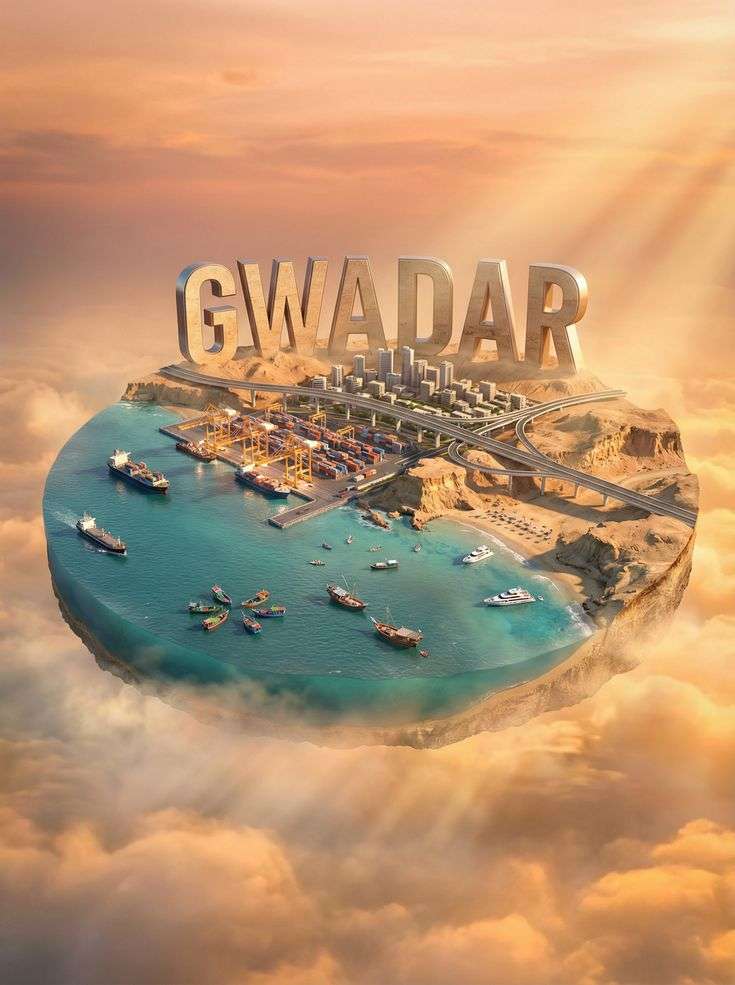
China’s involvement in Gwadar has become one of the most significant development partnerships in South Asia. Located on Pakistan’s Arabian Sea coast, Gwadar is at the heart of the China-Pakistan Economic Corridor (CPEC), a flagship project of China’s Belt and Road Initiative (BRI). Over the last decade, China has invested billions of dollars in infrastructure, transportation, healthcare, education, energy, and port development to transform Gwadar into a regional trade and logistics hub. Recent government updates also show continued work on water supply systems, Free Zone expansion, and operational improvements for Gwadar Port.
Understanding Gwadar’s Strategic Importance
Gwadar sits near the entrance of the Persian Gulf, only a short distance from one of the world’s busiest oil shipping routes—the Strait of Hormuz. This location makes the city strategically valuable for international trade, maritime security, and regional connectivity. For Pakistan, Gwadar represents an opportunity to diversify its economy by developing a modern deep-sea port capable of handling large cargo vessels and serving as a gateway to Central Asia, the Middle East, and Western China.
China views Gwadar as an important link in its broader Belt and Road Initiative because it provides an alternative trade route that can reduce transportation distances for goods moving between western China and global markets. Rather than relying entirely on eastern Chinese ports, goods can potentially travel through Pakistan using highways and future railway connections. Recent discussions between Pakistan and China continue to emphasize Gwadar’s role as a regional logistics hub, although further infrastructure and security improvements remain priorities.
What is the China-Pakistan Economic Corridor (CPEC)?
The China-Pakistan Economic Corridor (CPEC) is one of the largest bilateral infrastructure programs in Asia. It includes investments in highways, power generation, industrial zones, railways, digital connectivity, and Gwadar Port. Since its launch in 2015, CPEC has expanded beyond transport infrastructure to include social development projects aimed at improving education, healthcare, clean water, and employment opportunities.
Why Gwadar Is the Heart of CPEC
Gwadar serves as the southern gateway of CPEC. While highways connect northern Pakistan with China’s Xinjiang region, Gwadar provides direct access to the Arabian Sea. This combination creates a potential trade corridor stretching thousands of kilometers across Pakistan.
Pakistan’s Planning Ministry has repeatedly described Gwadar as a future center for logistics, manufacturing, and international trade. Government planning meetings held in 2025 focused on increasing cargo traffic, attracting private-sector investment, and making Gwadar more competitive with regional ports.
China’s Major Investments in Gwadar
China’s investments extend far beyond constructing a port. Instead, the development strategy focuses on building an entire economic ecosystem that supports business growth and urban development.
Gwadar Port Development
The modernization of Gwadar Port remains the flagship project. China has supported port infrastructure, cargo handling facilities, and operational improvements designed to accommodate larger commercial vessels. The long-term vision is to establish Gwadar as a regional transshipment hub connecting South Asia, Central Asia, the Middle East, and Africa.
Gwadar Free Zone
Adjacent to the port is the Gwadar Free Zone, where businesses receive tax incentives and customs benefits. According to official CPEC progress reports, dozens of enterprises have already registered for investment, and several companies have started production while expansion continues into Phase II.
East Bay Expressway
One of the most important completed projects is the East Bay Expressway, which directly links Gwadar Port with Pakistan’s national highway network. This dedicated freight route significantly improves cargo movement by reducing congestion within the city.
New Gwadar International Airport
China financed the construction of the New Gwadar International Airport, one of Pakistan’s largest airports by land area. The airport is expected to support future tourism, cargo transportation, and international business activities as Gwadar’s economy grows. While infrastructure has been completed, passenger operations continue to expand gradually.