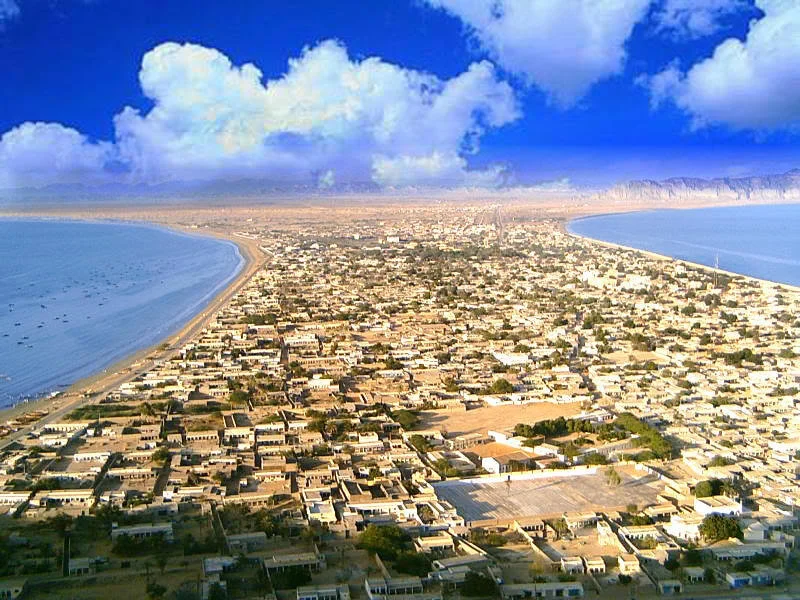
Top Rated Society in Gwadar – Canadian City Gwadar
When people search for the top rated society in Gwadar, they are usually looking for much more than an attractive location or a low plot price. A serious property buyer wants to know whether a project has proper regulatory documentation, a practical master plan, development activity, access to important parts of the city, and potential to remain relevant as Gwadar grows. Canadian City Gwadar is one of the housing projects that deserves attention in this discussion because the project’s official information describes it as a 346-acre housing society with residential and commercial plots, while the Gwadar Development Authority’s public NOC database lists Canadian City as a housing project with NOC number 26/05/HS/GDA.
The phrase “top rated” should not be treated as a government-issued ranking unless a formal ranking has actually been published by a competent authority. Instead, buyers can evaluate a society through measurable factors such as regulatory status, planning, location, development, accessibility, plot options, and the credibility of available documentation. On those practical criteria, Canadian City Gwadar presents several features that make it worthy of consideration by people exploring property in Gwadar. The project’s official website states that it is located on Main Mand Avenue, near Gwadar’s deep-sea port, and that it aims to provide residential and commercial opportunities within an internationally planned housing environment.
Why Gwadar Is Becoming a Major Property Destination
Gwadar has a different property story from many conventional Pakistani cities. Its appeal is closely connected with its coastal geography, port, planned infrastructure, economic activity, and its role in regional connectivity. The Gwadar Development Authority itself maintains dedicated categories for commercial schemes, house schemes, industrial schemes, recreational schemes, and major completed projects, showing that urban development in the city is being approached through multiple planned sectors.
For a property investor, this broader picture matters because real estate does not develop in isolation. A housing society becomes more useful when the surrounding city develops roads, commercial areas, transportation links, employment opportunities, public facilities, and other supporting infrastructure. Think of a housing project as a piece of a larger puzzle: even an attractive plot needs a growing city around it to create sustained demand. Gwadar’s long-term development story therefore remains an important consideration for anyone researching residential or commercial property.
Gwadar’s Strategic Location
Gwadar’s position on the Arabian Sea gives it a distinctive geographical advantage. The city is associated with Gwadar Port and the wider China-Pakistan Economic Corridor, while its location also connects it with broader regional trade ambitions. Canadian City Gwadar’s own project material highlights the importance of Gwadar’s connection with CPEC and describes the city as strategically positioned between the Arabian Sea and the wider regional trade network.
That does not mean every property investment will automatically produce a profit. Real estate returns depend on purchase price, location within a project, development progress, market demand, holding period, documentation, and many other factors. However, the strategic importance of a city can create a foundation for long-term property demand when supported by actual infrastructure and economic activity. This is why Gwadar continues to attract attention from buyers looking beyond short-term property speculation.
Infrastructure and Economic Development
Infrastructure is one of the strongest factors behind any serious property market. Roads, airports, ports, commercial districts, utilities, schools, healthcare facilities, and public services can gradually transform the practical value of land. Gwadar’s development agenda includes multiple categories of infrastructure and urban projects, while the GDA website also provides resources related to its master plan, NOC verification, commercial schemes, house schemes, and major projects.
For investors considering Canadian City Gwadar, this means the project should be viewed as part of Gwadar’s wider urban development rather than as an isolated plot-selling opportunity. A buyer should study both the project and its surroundings. The strongest decisions normally come from understanding how a society fits into the city’s existing and planned road network, commercial activity, employment centers, port-related growth, and residential demand.
What Makes a Housing Society Top Rated?
There is no single feature that automatically makes a housing society the best. A project can have an excellent location but weak documentation, or attractive marketing but limited development. A sensible buyer therefore needs a checklist that separates genuine project fundamentals from promotional language. The most important questions include: Is the project verifiable with the relevant authority? Is the NOC status clear? Is the land and master plan documentation available? Are roads and infrastructure being developed? Are residential and commercial areas properly planned? Can the buyer understand exactly what is being purchased?
For this reason, Canadian City Gwadar can be evaluated through objective characteristics instead of relying only on the phrase “top rated society.” The GDA’s NOC verification page lists Canadian City as a housing project, gives its NOC number as 26/05/HS/GDA, records an issuance date of July 14, 2005, identifies an area of 346.75 acres, and currently shows its status as “restored.” These are useful details for due diligence because buyers can compare project marketing information against the regulator’s public record.
NOC and Regulatory Verification
Regulatory verification should be one of the first steps before purchasing property. Marketing material may highlight location, facilities, prices, payment plans, or future potential, but an investor should separately verify the project’s legal and regulatory position. The GDA maintains an online NOC verification resource that allows buyers to examine project records rather than depending exclusively on statements made by sellers or agents.
For Canadian City, the official GDA record identifies the project as “Canadian City,” classifies it as a housing project, and lists NOC number 26/05/HS/GDA. The GDA record also shows the project’s status as restored, which is important wording that buyers should understand directly from the authority before completing a transaction. A careful buyer should always request and independently verify current documentation, especially if purchasing a new plot, transferring an existing allocation, or dealing with a third-party seller.
Location, Planning, and Accessibility
After documentation, location becomes one of the most important property factors. A good location is not simply “near the sea” or “near the port”; it should have practical access to roads, commercial activity, public services, and future development corridors. Canadian City’s official website describes the project as being on Main Mand Avenue and near the deep-sea port, while its project material presents the development as a planned residential and commercial community.
Accessibility matters because property value is ultimately connected to usability and demand. A residential plot should be convenient for people who may eventually live there, while a commercial plot needs visibility, traffic, surrounding businesses, and customer access. Investors should therefore study the actual map, road access, plot location, block, development status, and surrounding land uses before deciding whether a particular plot is attractive.
Canadian City Gwadar at a Glance
Canadian City Gwadar is presented by its official project website as a 346-acre housing society offering both residential and commercial plots. The project describes itself as being located in the heart of Gwadar and emphasizes planned development and modern living standards. Its official material also states that the project is listed in the “A” category of Gwadar Master Plan Phase 1.
The scale of a project matters because larger planned communities can potentially accommodate a broader mix of residential, commercial, road, and community requirements. However, size alone should never be interpreted as a guarantee of investment performance. The more useful question is how effectively the available land is planned and developed, and whether the project’s actual progress matches the documentation and commitments provided to buyers.
Project Size and Master Plan Position
The official Canadian City website states that the project covers 346 acres and describes it as part of the “A” category of Gwadar Master Plan Phase 1. This positioning is presented by the developer as one of the project’s distinguishing characteristics. Investors should still verify master-plan references and plot-specific details with the relevant authority before relying on them for a purchase decision.
A master plan is essentially the blueprint of a city or development. It determines how residential areas, commercial areas, roads, public spaces, and other functions are arranged. When a property fits into a coherent plan, its future use can be easier to understand. That clarity is valuable because real estate investment is often a long game: the buyer may purchase today based on what the surrounding area is expected to become several years from now.
Residential and Commercial Plot Options
One advantage of a mixed-use housing society is the ability to serve different property requirements. Canadian City Gwadar offers both residential and commercial plots, according to its official website. Residential plots are generally considered by people planning to build homes or hold residential property, while commercial plots may appeal to investors interested in shops, offices, businesses, or future commercial activity, subject to applicable planning and development rules.
This distinction is important because residential and commercial property behave differently. A residential investor may prioritize peaceful surroundings, road access, utilities, plot orientation, and community facilities. A commercial investor may focus more heavily on frontage, visibility, road width, footfall, nearby businesses, and the future commercial catchment. Buyers should therefore select a plot based on their intended purpose rather than simply choosing the largest or cheapest available option.
Why Canadian City Gwadar Stands Out
Canadian City Gwadar stands out in searches for Gwadar property because several project fundamentals can be independently examined. The project has a publicly searchable entry in the GDA NOC database, while its official website provides information about its size, location, plot categories, plans, and development vision. For a potential investor, having information that can be checked from more than one source is considerably more useful than relying solely on advertising.
The project also occupies a place in the longer story of Gwadar’s private housing development. The GDA database shows that Canadian City received its housing NOC in 2005. That history does not guarantee future returns, but it provides a useful starting point for understanding the project’s regulatory record and longevity. Buyers should combine this historical information with the project’s current development condition and the exact status of the plot they are considering.
GDA NOC and Project Verification
The strongest factual point in evaluating Canadian City is that it appears in the GDA’s public NOC verification database. The regulator records Canadian City under housing schemes with NOC number 26/05/HS/GDA, an issuance date of 14 July 2005, an area of 346.75 acres, and a current status shown as restored.
This information should be used as a due-diligence starting point rather than as a substitute for checking the complete transaction documents. Buyers should confirm the current position directly with GDA, verify seller ownership, check transfer requirements, examine allotment or allocation documents, and make sure the plot number and location correspond to approved plans. Property decisions become much safer when documentation is treated as seriously as price.
Development-Focused Planning
A housing society needs more than boundaries on a map. Roads, streets, infrastructure, commercial areas, utilities, landscaping, and community facilities determine whether a planned society can eventually become a functional neighborhood. Canadian City’s official website says that the project aims to provide an internationally planned housing environment and describes continuous development according to community needs.
For buyers, the practical lesson is simple: inspect what exists today and separately evaluate what is planned for tomorrow. Do not value a plot solely on future promises. Ask for evidence of completed development, visit the site if possible, inspect access roads, and understand the timeline and responsibilities associated with remaining infrastructure. A strong investment decision is based on both present reality and reasonable future potential.
Location Advantages of Canadian City Gwadar
Location is one of the central reasons buyers consider Canadian City Gwadar. The project’s official material places it on Main Mand Avenue and describes it as being near Gwadar’s deep-sea port. This positioning connects the project discussion with one of the city’s most important economic assets.
The real advantage of a location, however, depends on accessibility rather than slogans. Investors should examine actual road connections, travel time to important destinations, surrounding development, and how the area is expected to evolve. A plot that is strategically located but difficult to access today may be a long-term opportunity, while another plot with immediate access may suit a buyer seeking practical usability. The right choice depends on the investor’s objective.
Access to Gwadar’s Key Areas
A property becomes more useful when it can connect residents and businesses with important city destinations. For Canadian City, buyers should study its relationship with the port, major roads, commercial zones, airport connectivity, public facilities, and other planned development areas. The official project material highlights Gwadar’s wider strategic connection with CPEC and the port, making accessibility an important part of the investment story.
At the same time, investors should avoid assuming that every future infrastructure project will automatically increase their plot value. Development schedules can change, projects can face delays, and market conditions can shift. The safest approach is to treat future infrastructure as potential upside rather than guaranteed appreciation. This mindset helps investors make decisions based on evidence instead of excitement.
Investment Potential of Canadian City Gwadar
Property investment is ultimately a question of risk versus potential reward. Canadian City Gwadar can attract investors because it combines a large planned project, residential and commercial opportunities, a documented GDA housing NOC, and a location within a city that has strategic economic ambitions. These characteristics can make it relevant to investors with a medium- or long-term outlook.
Still, no housing society should be marketed as a guaranteed-profit investment. Property prices can rise, remain stable, or decline depending on demand, development, economic conditions, financing costs, and investor sentiment. A sensible investor should calculate the total purchase cost, transfer expenses, development charges if applicable, holding period, expected rental or resale demand, and exit strategy before committing capital. The strongest investment is not necessarily the cheapest plot; it is the one whose price and fundamentals make sense together.
Residential Opportunities
For families, overseas Pakistanis, and long-term property holders, residential plots can represent a way to secure land within a planned community. Canadian City offers residential plots according to its official project information, making it relevant to buyers who are interested in future home construction or long-term holding.
The decision should be based on practical residential requirements. Buyers should consider plot size, road width, orientation, neighborhood development, access to utilities, nearby community facilities, and construction rules. A plot may look inexpensive when viewed only through its price per square yard, but a better-located plot can sometimes provide stronger usability and resale appeal. Before buying, compare multiple plot locations within the project rather than evaluating the society only at the project level.
Commercial Investment Opportunities
Commercial real estate can offer a different investment profile from residential property. Canadian City Gwadar offers commercial plots, according to its official project information, which gives investors the opportunity to examine business-oriented property within the same broader development.
The most important commercial factor is not simply plot size. Visibility, road frontage, traffic flow, nearby population, surrounding businesses, parking, accessibility, and the maturity of the commercial zone can all influence future demand. A commercial plot located on a major road may have a very different investment profile from one located deep inside a residential block. Investors should therefore assess each commercial plot individually and consider what type of business could realistically operate there in the future.
Canadian City Gwadar and Future Growth
Gwadar’s future property story is connected to the city’s wider economic transformation. Its port, coastal location, CPEC association, infrastructure plans, and urban development agenda continue to shape the way investors view the city. The GDA itself maintains dedicated information about commercial, housing, industrial, recreational, and major development schemes, illustrating the range of development taking place within the city’s planning framework.
Canadian City can benefit from broader city growth if surrounding infrastructure and demand develop as expected. Yet investors should distinguish between city-level potential and project-level performance. Gwadar may grow while individual projects experience different levels of development or demand. That is why the best approach is to examine Canadian City’s exact location, documentation, development, pricing, and plot category rather than assuming that general Gwadar growth guarantees appreciation.
How to Evaluate a Property Before Buying
Before buying any plot, create a simple verification checklist. Start with the project’s regulatory status, then confirm the exact plot details, seller ownership, transfer process, approved layout, development status, and payment obligations. The GDA provides an online NOC verification resource, which should be part of a buyer’s independent research process.
A site visit is equally valuable. Walk or drive around the area, observe access roads, inspect nearby development, speak with existing stakeholders where appropriate, and compare the advertised condition with what you actually see. If the buyer cannot visit personally, an independent and trustworthy representative should inspect the site. Never make a major property decision based only on a social media post, WhatsApp message, brochure, or verbal promise.
Who Should Consider Canadian City Gwadar?
Canadian City may be relevant to investors who have a medium- to long-term perspective and want to explore residential or commercial property in Gwadar. It may also interest buyers who place importance on documented regulatory information, planned development, and access to the broader Gwadar growth story. The project’s official information confirms its residential and commercial plot offerings and identifies its GDA approval and project scale.
However, suitability depends on the individual buyer. Someone seeking immediate rental income may have different requirements from someone holding land for several years. Likewise, a family looking to build a home should prioritize neighborhood livability, utilities, access, and plot location rather than focusing exclusively on speculative appreciation. Investors should define their objective first and then choose the property that matches it.
Canadian City Gwadar vs. Other Housing Options
Comparing housing societies is one of the smartest steps an investor can take. Instead of asking only which society is “number one,” compare projects according to documentation, location, development, accessibility, plot prices, payment structure, facilities, resale activity, and future land use. The GDA’s NOC database itself shows that Gwadar contains multiple housing schemes with different regulatory histories and statuses.
Canadian City has the advantage of being identifiable in that database and having publicly available project information about its location and scale. That gives potential buyers a foundation for comparison. The final choice, however, should depend on the exact plot and the buyer’s investment objectives. A top-rated society for one investor may not be the best fit for another because budget, timeline, intended use, and risk tolerance differ.
Important Documents Investors Should Check
Documentation is the backbone of a safe property transaction. A buyer should ask for the relevant allotment or allocation documents, seller identification, ownership or transfer records, payment receipts, applicable development or utility charges, and any other documents required by the project’s transfer procedure. Regulatory records should also be independently checked through the relevant authority.
Canadian City’s entry on the GDA NOC database provides a useful reference point because it identifies the project’s NOC number, area, location, issuance date, and status. Buyers should not stop at seeing an NOC number in an advertisement; they should compare the information against the authority’s current record and verify whether the specific plot they want is transferable and compliant.
Common Mistakes to Avoid
One of the biggest mistakes in real estate is buying because someone says the price will “definitely double.” No responsible investor can guarantee future property appreciation. Another common mistake is purchasing a plot without understanding its exact location, development status, transfer charges, or legal documentation.
A third mistake is confusing a society’s reputation with the quality of a particular plot. Even within a recognized housing project, one plot can be better positioned than another. Road frontage, corner location, commercial visibility, block development, nearby amenities, and accessibility can significantly influence future usability. Investors should therefore evaluate the specific asset, not only the project name.
Why Long-Term Planning Matters in Gwadar
Gwadar property should generally be approached with patience. Large-scale urban development rarely happens overnight. Roads, businesses, population growth, infrastructure, and community services develop progressively, and property markets often respond to these changes over time.
Canadian City Gwadar’s combination of planned residential and commercial land, its documented GDA housing NOC, and its location within the broader Gwadar development story make it a project worth researching for buyers considering long-term property ownership. The important point is to combine optimism with verification. Think of real estate like planting a tree: the location and foundation matter first, but meaningful growth requires time, development, and the right surrounding conditions.
Frequently Asked Questions
1. Is Canadian City Gwadar a GDA-approved housing society?
The Gwadar Development Authority’s public NOC verification database lists Canadian City as a housing project with NOC number 26/05/HS/GDA, issued on July 14, 2005. The database currently records its status as “restored.” Buyers should independently verify the current regulatory and plot-specific position before purchasing.
2. How large is Canadian City Gwadar?
Canadian City’s official website states that the project covers approximately 346 acres, while the GDA NOC record lists an area of 346.75 acres. The project offers both residential and commercial plots.
3. Why is Canadian City considered for investment in Gwadar?
Canadian City is considered by potential buyers because of its documented GDA housing-project record, project scale, residential and commercial options, location within Gwadar, and connection to the city’s broader development story. These factors can make it worth researching, but they do not guarantee investment returns.
4. Is Canadian City Gwadar suitable for residential buyers?
Yes, the project officially offers residential plots. Buyers interested in constructing a future home should evaluate the exact plot location, development status, road access, utilities, community facilities, and applicable construction rules before purchasing.
5. What should I verify before buying a plot in Canadian City Gwadar?
Verify the project’s current regulatory status, the exact plot number and location, ownership and transfer documents, payment history, applicable charges, approved layout, and development status. The GDA’s online NOC verification system is an important starting point for independent verification.