Gwadar Sea Port: Pakistan’s Strategic Gateway to Regional Trade and Economic Growth
Introduction to Gwadar Sea Port
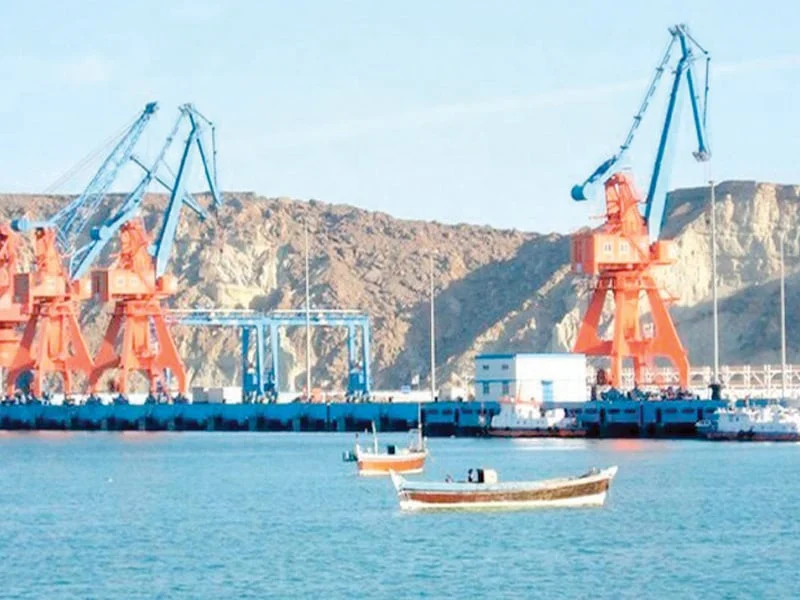
Gwadar Sea Port is one of Pakistan’s most strategically important maritime development projects, located on the Arabian Sea in Gwadar, Balochistan. Its location gives it a unique position close to major international shipping routes and near the entrance to the Persian Gulf, making it relevant to regional trade, logistics, energy transportation, and economic connectivity. Unlike a conventional port that exists only to handle ships and cargo, Gwadar has been planned as part of a broader economic ecosystem involving transportation infrastructure, industrial activity, logistics, commercial development, and the China-Pakistan Economic Corridor (CPEC). The official Gwadar Port Authority describes its mandate as covering the planning, construction, operation, management, and maintenance of Gwadar Deep Water Port.
The story of Gwadar Sea Port is therefore much bigger than cranes, containers, warehouses, and ships. It is about geography and the possibility of turning geography into economic value. Pakistan already has major maritime gateways at Karachi and Port Qasim, but the government has positioned Gwadar as a third deep-sea port capable of supporting future growth in national maritime capacity. As development continues, the real question is not simply whether Gwadar has potential, but how effectively Pakistan can connect the port with roads, industry, energy, water, logistics networks, and local communities.
Where Is Gwadar Sea Port Located?
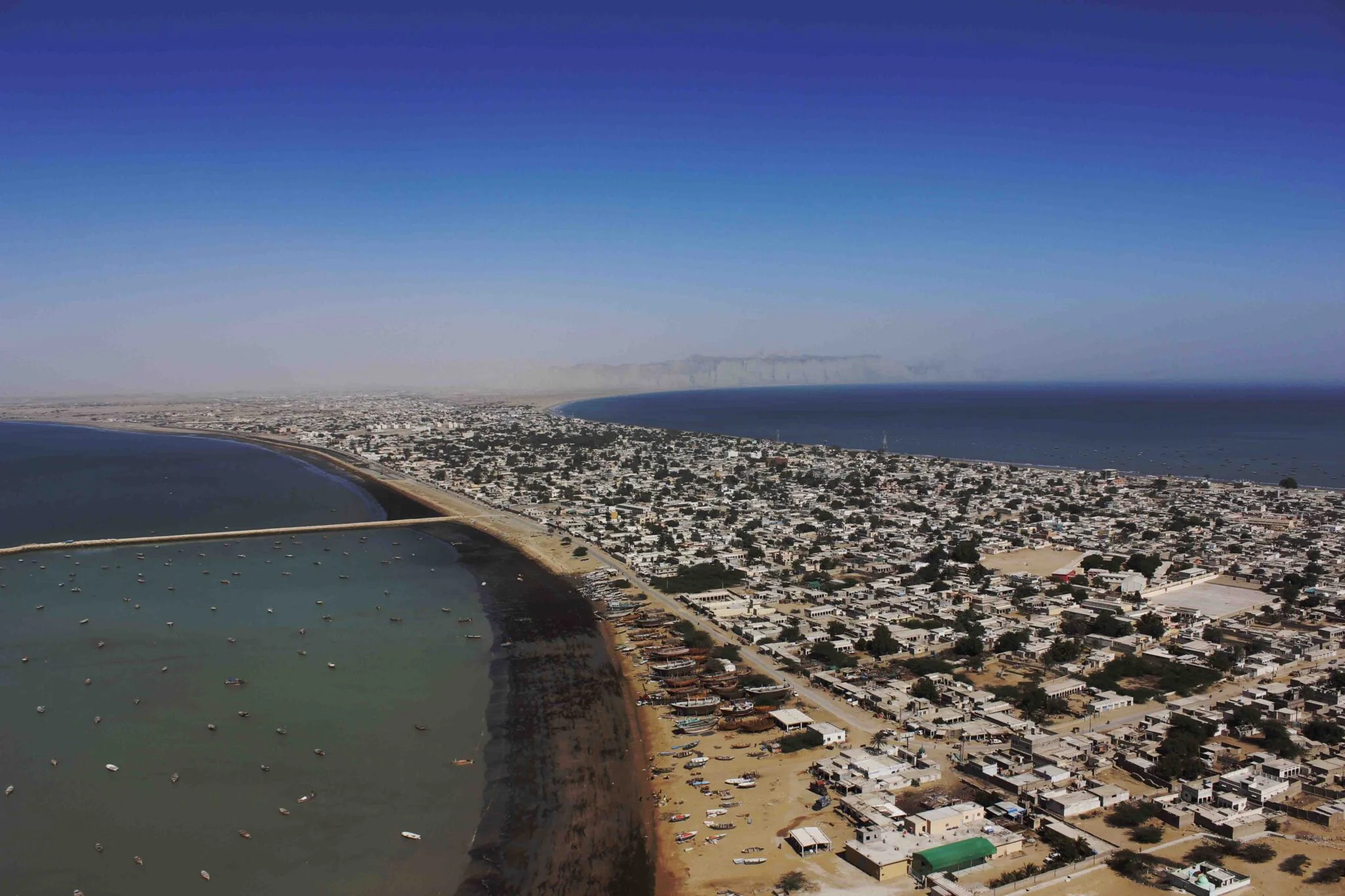
Gwadar Sea Port is situated in the coastal city of Gwadar in Balochistan, southwestern Pakistan. Its position on the Arabian Sea is one of its most important advantages because the port sits close to established maritime routes connecting the Middle East, South Asia, Africa, and East Asia. Geography alone, however, does not automatically turn a port into a major international trade hub. A successful port needs an interconnected system of highways, railways, industrial zones, customs facilities, warehouses, energy supplies, digital infrastructure, and efficient cargo-handling operations.
Gwadar’s location gives Pakistan an opportunity to strengthen its maritime position while also providing a potential gateway for trade involving the wider region. The port’s strategic significance has been repeatedly connected with CPEC and China-Pakistan economic cooperation. In 2026, Pakistan and China again emphasized efforts to strengthen CPEC and develop Gwadar as a regional connectivity hub, showing that the port remains an important part of the two countries’ economic relationship.
History and Development of Gwadar Port
The development of Gwadar as a modern port has taken place over several decades. The city itself has a long maritime history because fishing and coastal trade have traditionally played an important role in the local economy. Modern port development introduced a very different vision: transforming Gwadar from a primarily coastal community into an international maritime and commercial center.
The modern Gwadar Port project gained particular international attention through cooperation between Pakistan and China and later became a major component of CPEC. The development process involved port infrastructure, road connections, the Gwadar Free Zone, and supporting urban projects. The government’s broader approach has been to develop the port while encouraging private-sector participation in terminals and cargo-handling infrastructure. According to the Gwadar Port Authority, its development philosophy follows a landlord-port concept in which public authorities focus on overall port infrastructure while private-sector operators can participate in terminals and cargo-handling facilities.
Why Gwadar Port Is Strategically Important
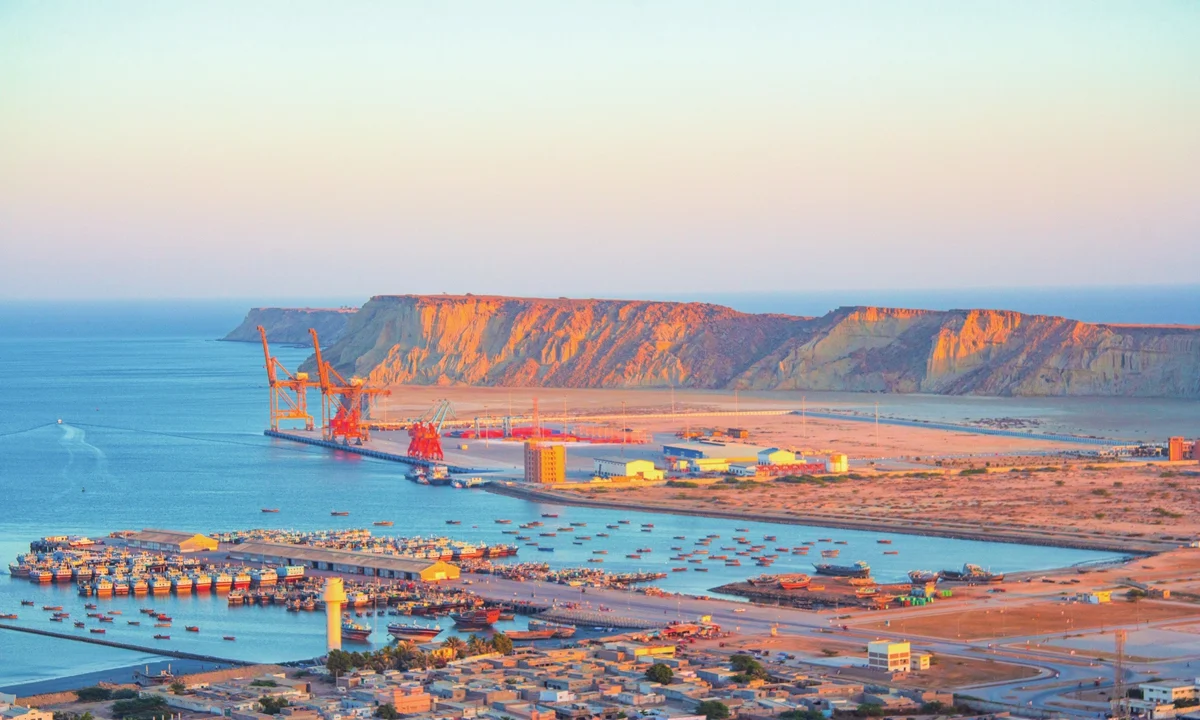
The strategic importance of Gwadar Sea Port comes primarily from its location. International maritime trade depends heavily on efficient routes between producing regions and consuming markets, and ports positioned near major shipping corridors can become valuable logistics centers. Gwadar’s location on the Arabian Sea places it close to the maritime approaches to the Persian Gulf while also connecting naturally with Pakistan’s western regions.
For Pakistan, Gwadar offers the possibility of expanding maritime capacity beyond the country’s established Karachi-area ports. The official Gwadar Port Authority explains that the development of a third deep-sea port was considered necessary because future national demand for port capacity could outgrow existing infrastructure. This makes Gwadar a long-term infrastructure project rather than simply a short-term commercial venture.
Gwadar Port and CPEC
The relationship between Gwadar Port and CPEC is central to understanding the project. CPEC was designed as a major economic connectivity framework linking infrastructure, transportation, energy, industrial cooperation, and trade between Pakistan and China. Gwadar is positioned at the southern end of this broader corridor, giving the port an important role in the overall connectivity concept.
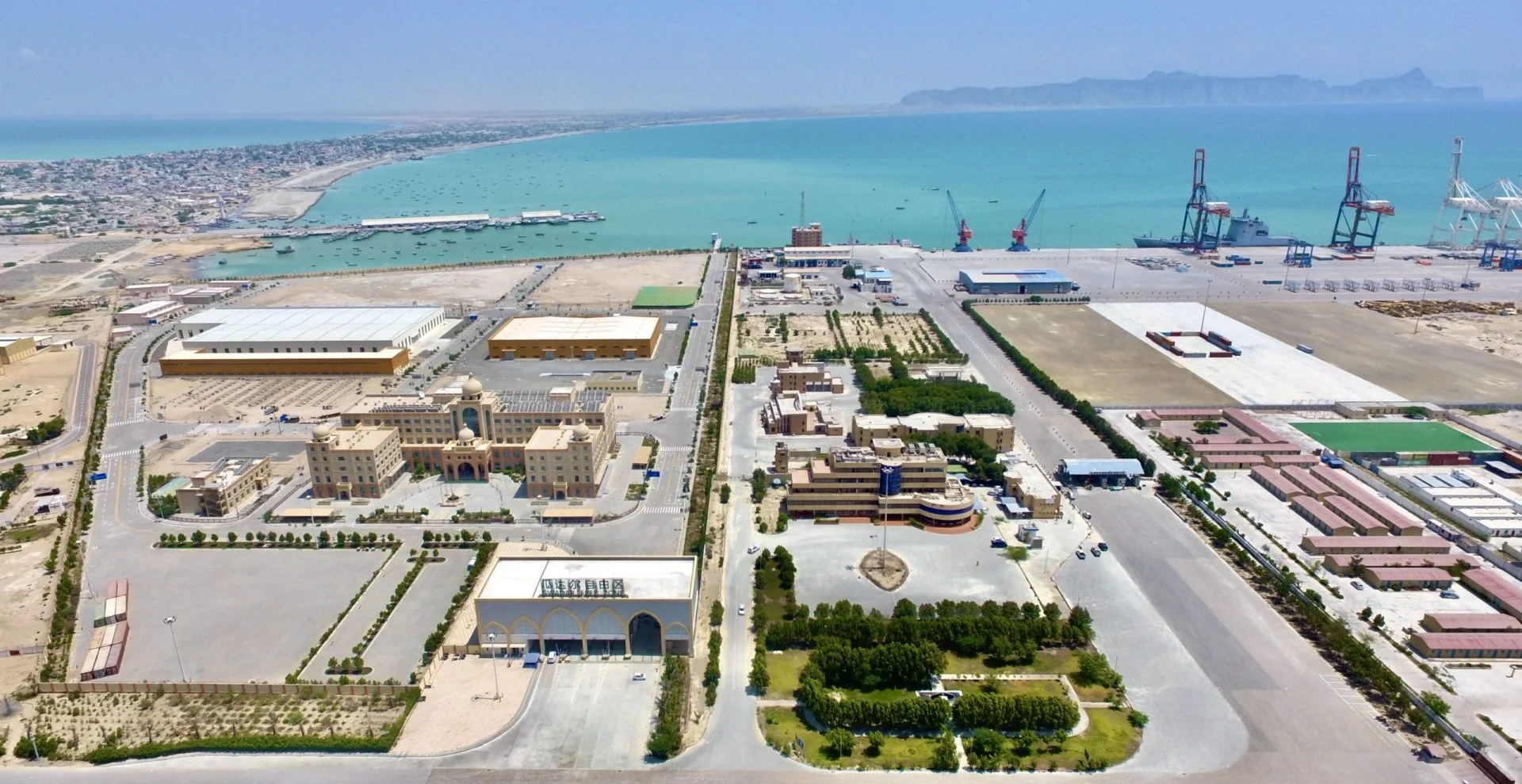
CPEC-related development has included roads, energy projects, port infrastructure, and the Gwadar Free Zone. The official CPEC project information states that the Gwadar Port Free Zone covers 2,281 acres, with the first 60-acre phase completed and development of the remaining phase initiated. The same source reports that enterprises have registered for investment and that commercial cargo activity has already taken place in the Free Zone.
Gwadar Port as a Deep-Sea Port
The term deep-sea port is important because it refers to maritime infrastructure designed to accommodate larger vessels and support international cargo operations. Deep-sea facilities can provide advantages for shipping companies when sufficient channel depth, berthing facilities, cargo-handling equipment, and supporting logistics infrastructure are available.
Gwadar has been planned as a deep-sea port capable of supporting Pakistan’s long-term maritime requirements. Yet port capacity is not measured only by the physical depth of water. Efficient operations also require reliable cargo handling, storage, customs clearance, transportation links, maintenance facilities, and predictable turnaround times. This means the future success of Gwadar will depend on how effectively the port is integrated with the rest of the economy rather than on its physical infrastructure alone.
Gwadar Port Free Zone
The Gwadar Port Free Zone is intended to complement port operations by attracting businesses, manufacturing, logistics companies, warehouses, and other commercial activities. The concept is straightforward: when goods arrive at a port, economic value can increase if companies can process, store, package, manufacture, or redistribute those goods nearby.
According to the official CPEC Secretariat, the Gwadar Port Free Zone has an allocated area of 2,281 acres, with infrastructure including roads, utilities, customs facilities, warehouses, offices, and related services planned as part of its development. The official project page reports that 46 enterprises had registered for investment and that three companies had started production at the time of its published progress information.
Trade Opportunities Through Gwadar Sea Port
One of the biggest opportunities associated with Gwadar Sea Port is regional trade. Pakistan is geographically connected to South Asia, Central Asia, China, the Middle East, and the Arabian Sea, but geography becomes economically useful only when transportation systems can efficiently move goods between these regions.
Gwadar could potentially serve several types of trade, including imports, exports, transshipment, bulk cargo, industrial inputs, and regional distribution. The port can also support businesses that need access to international shipping while operating closer to markets in Pakistan and neighboring regions. In practical terms, the opportunity is to create a supply-chain ecosystem in which a shipment does not simply arrive at the port and leave again, but instead generates economic activity through transportation, storage, processing, manufacturing, services, and employment.
Gwadar Port and Pakistan’s Maritime Economy
Pakistan’s maritime economy has traditionally been underutilized compared with the size and potential of the country’s coastline. Gwadar Port represents an opportunity to expand the role of maritime industries in national economic planning. Ports can generate revenue not only through cargo handling but also through logistics, ship services, warehousing, transportation, industrial development, and maritime support businesses.
A stronger maritime economy could also create opportunities for local entrepreneurs. Restaurants, transport companies, equipment suppliers, maintenance businesses, logistics providers, construction firms, and technology companies can all benefit when economic activity around a port increases. The Ministry of Maritime Affairs continues to identify Gwadar Port and Gwadar city among its strategic initiatives, while recent government announcements have highlighted efforts to strengthen maritime trade and the blue economy.
Recent Developments at Gwadar Port
Gwadar Port remains part of Pakistan’s current maritime development agenda. A notable recent development came in July 2026, when the Ministry of Maritime Affairs announced the launch of commercial bunkering services at Gwadar Port, presenting the initiative as a step toward strengthening maritime trade and Pakistan’s blue economy.
Bunkering is important because ships require fuel and related services, and ports that can provide such services can increase their attractiveness to maritime operators. It is one example of how port development can gradually move beyond basic cargo handling toward a broader maritime-services model.
At the international level, Pakistan and China also renewed their focus on developing Gwadar as a regional connectivity hub in 2026. These developments suggest that Gwadar’s role continues to evolve as Pakistan seeks to strengthen trade and maritime connectivity.
Infrastructure Supporting Gwadar Port
A port cannot operate effectively in isolation. The quality of its supporting infrastructure can determine whether businesses actually choose to use it. Roads connect cargo to inland markets, railways can move large volumes efficiently, power systems support industrial activity, water supplies sustain communities and businesses, and telecommunications allow companies to coordinate international supply chains.
For Gwadar, infrastructure development therefore extends beyond the port boundary. Roads and other CPEC-related projects have been designed to connect Gwadar with broader transportation networks. The Free Zone development also requires internal roads, utilities, customs infrastructure, warehouses, offices, and other facilities. The long-term challenge is to ensure that these individual projects function as one integrated economic system.
Gwadar Port and Regional Connectivity
The phrase regional connectivity is frequently associated with Gwadar because the port has the geographical potential to connect Pakistan with markets beyond its immediate coastline. The concept includes connections toward western China, Afghanistan, Central Asia, the Middle East, and international maritime routes.
The strongest version of this vision would involve cargo moving smoothly from production centers to Gwadar, entering the port efficiently, traveling by sea to international destinations, and returning through equally efficient supply chains. Achieving this requires cooperation among governments, logistics companies, shipping lines, customs authorities, investors, and infrastructure operators. In 2026, Pakistan and China explicitly highlighted the goal of making Gwadar a regional connectivity hub as part of their renewed focus on CPEC.
Economic Benefits of Gwadar Sea Port
The potential economic benefits of Gwadar extend across several sectors. Port activity can create direct employment in cargo handling, administration, engineering, security, transportation, maintenance, and maritime services. Indirect employment can develop through construction, hospitality, retail, warehousing, logistics, manufacturing, and professional services.
The larger economic benefit comes when port activity stimulates private investment. Imagine a port as the heart of a larger economic body: the port itself is important, but roads, industries, warehouses, businesses, workers, and consumers function like the arteries and organs around it. If these connections work efficiently, the entire system can grow. If they remain disconnected, even impressive infrastructure can struggle to reach its full economic potential.
Challenges Facing Gwadar Port
The development of Gwadar also faces significant challenges. Port infrastructure must be supported by reliable transportation links, utilities, security, skilled labor, commercial demand, and consistent investment. Security concerns in Balochistan have also affected perceptions of the region and remain an important consideration for major infrastructure projects and foreign investment. Recent attacks in 2026 included violence affecting Gwadar and other parts of Balochistan, underlining the continuing security challenge.
Environmental and climate-related pressures are another concern. Gwadar is a coastal city, meaning flooding, rising sea levels, coastal erosion, water scarcity, and extreme weather can affect infrastructure and communities. Reporting has highlighted the vulnerability of Gwadar to climate-related challenges, including flooding and water shortages. Sustainable development therefore needs to be part of the port’s long-term planning rather than an afterthought.
Gwadar Port and Local Communities
A successful port should benefit the communities around it. Gwadar has a long-standing fishing economy and a population whose livelihoods are closely connected to the sea. As port and industrial development expands, maintaining opportunities for local residents is essential for sustainable economic growth.
Employment, vocational training, small-business opportunities, fisheries support, healthcare, education, water availability, and reliable electricity can all influence how local communities experience development. Large infrastructure projects become more sustainable when residents see tangible economic and social benefits. For Gwadar, the long-term success of the port will therefore be measured not only in cargo volumes and investment figures but also in the quality of opportunities available to the people living in the city.
Future Potential of Gwadar Sea Port
The future potential of Gwadar Sea Port remains considerable investment figures but also in the quality of opportunities available to the people living in the city.
Future Potential of Gwadar Sea Port
The future potential of Gwadar Sea Port remains considerable, but potential should not be confused with guaranteed success. A strategic location creates an opportunity; effective infrastructure, competitive services, investment, governance, security, and are what turn that opportunity into sustained economic activity.
Pakistan’s renewed emphasis on CPEC and regional connectivity gives Gwadar another opportunity tsition. citeturn0news49 The expansion of maritime services, including the 2026 launch of commercial bunkering, is another indication that the port ecosystem is gradually becoming broader. citeturn0search2 If supporting infrastructure and industrial activity continue to develop, Gwadar could become increasingly important to Pakistan’s maritime and logistics economy.
Gwadar Port and Investment Opportunities
The development of a major port can create opportunities for investment in surrounding sectors. Investors may look beyond the port itself toward residential projects, commercial properties, warehouses, logistics facilities, retail businesses, hospitality, construction, industrial operations, and services.
For property investors, however, careful due diligence remains essential. Not every project located in Gwadar automatically benefits equally from port development. Investors should examine legal approvals, development status, location, infrastructure, accessibility, ownership documentation, and the credibility of the developer before making decisions. The growth story surrounding Gwadar can be attractive, but responsible investment requires separating long-term fundamentals from marketing claims.
Why Gwadar Matters for Pakistan
Gwadar matters because it gives Pakistan another opportunity to strengthen its position as a maritime and trade country. Pakistan’s geography places it close to important global trade routes, but economic value comes from converting that geography into functioning infrastructure and competitive services.
The port also fits into a broader national vision involving the blue economy, CPEC, regional connectivity, industrial develo trade. The Ministry of Maritime Affairs currently lists CPEC and Gwadar Port and City among its initiatives, demonstrating the continuing importance of Gwadar in national maritime planning. citeturn0search2
Gwadar Sea Port vs. Traditional Port Development
| Factor | Gwadar Sea Port | Traditional Port Development |
| Strategic role | Regional connectivity and maritime gateway | Primarily cargo handling and national trade |
| Economic ecosystem | Port, Free Zone, logistics and industry | Often centered mainly around port operations |
| CPEC connection | Major component of CPEC | Not necessarily linked to CPEC |
| Development vision | Long-term integrated city and port development | Port-focused expansion |
| Regional potential | Pakistan, China, Central Asia, Middle East and international markets | Often concentrated on domestic markets |
| Supporting development | Roads, Free Zone, utilities and maritime services | Varies according to location |
The comparison shows why Gwadar is discussed differently from a conventional port project. Its intended role includes the development of an economic ecosystem around maritime infrastructure rather than simply increasing berth capacity.
The Road Ahead for Gwadar Port
The next phase of Gwadar’s development will require patience, investment, and practical execution. A world-class port cannot be created simply by constructing physical infrastructure; it needs shipping activity, reliable logistics, industrial customers, skilled workers, efficient customs procedures, supporting utilities, and commercially competitive services.
The most important opportunity may be integration. If Gwadar Port, the Free Zone, road networks, energy infrastructure, maritime services, commercial areas, and residential development grow together, the city can become a stronger economic center. If these components develop independently without sufficient coordination, the benefits may remain limited. The future of Gwadar is therefore likely to depend as much on execution and connectivity as on its strategic location.
Canadian City Gwadar – A Top Housing Scheme in Gwadar
As Gwadar continues to develop as an important maritime and economic hub, demand for quality residential communities is also attracting increasing attention. Canadian City Gwadar is positioned as a top housing scheme in Gwadar, offering a residential development concept for people looking to become part of the city’s long-term growth. The project’s location within the wider Gwadar development landscape makes it relevant to the growing interest in residential and commercial opportunities connected with the city’s expanding infrastructure, port activity, and economic potential. For buyers and investors researching property in Gwadar, evaluating a housing project should involve careful consideration of location, development progress, accessibility, documentation, and available facilities.
The connection between Gwadar Sea Port and residential development is particularly important when considering the city’s future. As port-related businesses, commercial activities, infrastructure projects, and employment opportunities expand, the need for housing and supporting services can also increase. A well-planned housing community can become part of this broader urban ecosystem by providing residential options for families, professionals, business owners, and investors. Canadian City Gwadar aims to participate in this developing property market and establish itself as one of the top housing schemes in Gwadar for people interested in the city’s long-term residential potential.

Why Canadian City Gwadar Is Gaining Attention
The growing importance of Gwadar Port has increased interest in the city’s real estate sector. Investors are increasingly looking beyond the port itself and considering the wider development taking place across Gwadar. Canadian City Gwadar is marketed as a modern housing opportunity within this evolving city, making it relevant for buyers who want to explore property options alongside Gwadar’s broader economic transformation. However, prospective buyers should always conduct their own due diligence, verify approvals and documentation, and assess the actual development status before making a property investment decision.
Canadian City Gwadar and the Future of Gwadar
The future of Gwadar is closely connected with infrastructure, trade, tourism, industry, residential development, and maritime activity. As Gwadar Sea Port continues to play a role in Pakistan’s regional connectivity ambitions, housing projects can support the city’s expanding population and workforce. Canadian City Gwadar seeks to benefit from this wider development story by providing a residential option within one of Pakistan’s most closely watched emerging cities. For anyone searching for a top housing scheme in Gwadar, the project can be considered alongside other developments after comparing location, facilities, accessibility, legal status, development progress, and investment fundamentals.
Gwadar Port and Real Estate Development
A major port can influence more than trade and transportation; it can also stimulate demand for residential, commercial, hospitality, and service-sector development. This is why the future of Gwadar Sea Port is relevant to people researching Gwadar real estate. As connectivity and economic activity improve, strategically positioned housing communities may benefit from increased demand. Canadian City Gwadar is therefore part of the broader conversation surrounding residential development in the city and can be explored by buyers interested in the potential long-term growth of Gwadar’s property market.
FAQs About Gwadar Sea Port
1. Where is Gwadar Sea Port located?
Gwadar Sea Port is located in Gwadar, Balochistan, on Pakistan’s Arabian Sea coast. Its position gives it proximity to major maritime routes and makes it strategically relevant to regional and international trade.
2. Why is Gwadar Port important to CPEC?
Gwadar Port is a major component of CPEC because it provides theor the broader connectivity and economic-development framework linking Pakistan and China. The Gwadar Free Zone and supporting infrastructure are also connected with this development vision. citeturn0search3
3. What is the Gwadar Port Free Zone?
The Gwadar Port Free Zone is an industrial and commercial area developed to support port-related economiicial CPEC project information identifies 2,281 acres for the Free Zone and describes infrastructure for businesses, warehouses, customs facilities, utilities, and other supporting services. citeturn0search3
4. What recent development has taken place at Gwadar Port?
In July 2026, PakiMaritime Affairs announced the launch of commercial bunkering services at Gwadar Port, describing the initiative as a step toward strengthening maritime trade and the country’s blue economy. citeturn0search2
5. What is the future of Gwadar Sea Port?
The future of Gwadar depends on continued infrastructure development, commercial activity, regional connectivity, security, investment, maritime services, anarticipation. Pakistan and China reaffirmed efforts in 2026 to develop