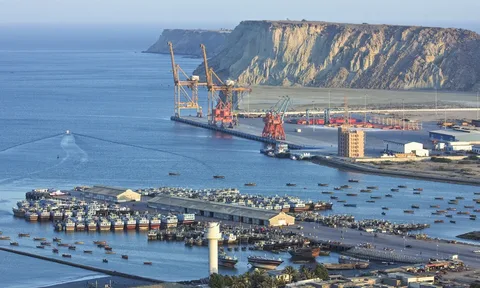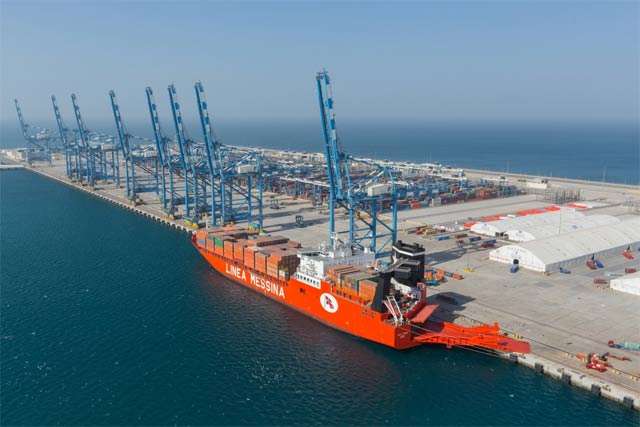
Gwadar is no longer just a “project of the future”—it is officially open for business. As of April 2026, the port has hit several critical milestones that are reshaping regional trade. Here is the breakdown of what’s happening right now
Operational Breakthroughs
• 24/7 Efficiency: To compete with global hubs like Dubai and Singapore, Gwadar has shifted to round-the-clock operations, maximizing cargo throughput.
• Cargo Surge: Mid-April saw a massive spike in activity. High-capacity vessels like the MV Riva Glory recently discharged over 14,000 metric tons of cargo, signaling a shift toward heavy-load handling.
• The “Safe Harbor” Effect: With geopolitical tensions disrupting traditional Gulf routes and the Strait of Hormuz, global shipping lines are increasingly rerouting to Gwadar as a secure, strategic alternative.
Infrastructure & Connectivity
• Airport Integration: The New Gwadar International Airport is now fully operational, creating a seamless sea-to-air logistics corridor for CPEC.
• Water Security: The completion of a 158km pipeline from the Shadi Kor and Swad dams has finally addressed the long-standing potable water crisis for the city and Free Zone.
• Advanced Security: New parametric security systems have been deployed, ensuring a “gold-standard” safety environment for international investors and stakeholders.
The Path to 2029
Under the 2025–29 Maritime Plan, the Gwadar Port Authority (GPA) is aggressively integrating port services with Central Asian markets. By linking directly to Uzbekistan and Turkmenistan via the newly functional Gabd–Rimdan land route, Gwadar is positioning itself as the primary gateway for landlocked Eurasia.
Economic Outlook: With an estimated $25 billion potential boost to Pakistan’s GDP, Gwadar is transitioning from a transit point to a full-scale industrial engine.